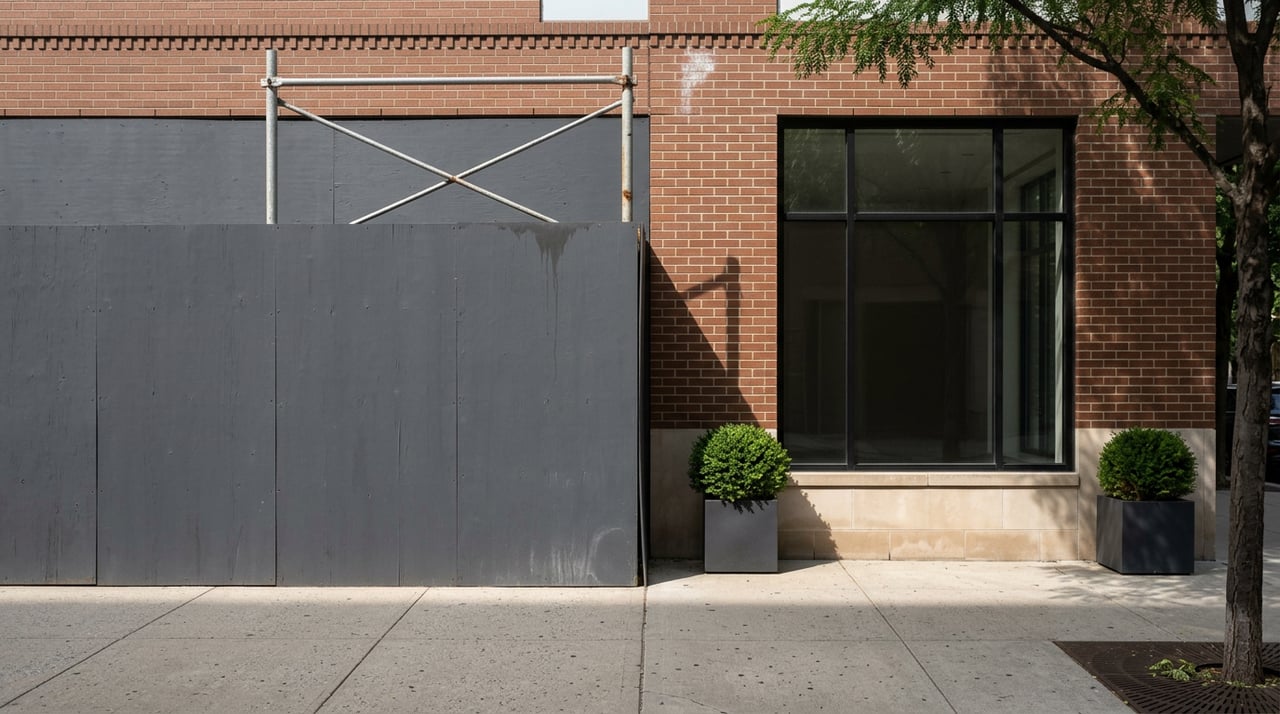
The Scaffolding on Oak Street Is Not a Warning Sign
Walk east from Rush Street toward Michigan Avenue this month, and you will pass several storefronts wrapped in plywood and orange fencing.
For longtime Gold Coast residents, that sight can feel familiar, and not in a reassuring way. On many commercial streets, construction barriers signal that a tenant has left and no one is ready to take its place.
On this stretch of Oak Street, they tell a different story.
Businesses and property owners are making substantial, long-term investments in the corridor, replacing existing spaces with custom flagships designed to serve them for years to come. The construction may be inconvenient, but it is not a sign that Oak Street is losing momentum. It is evidence that demand is reshaping the block.
Three Projects, One Clear Signal
At 109 East Oak Street, Razny Jewelers has leased its storefront since 2016. In 2024, the family-owned retailer purchased the neighboring building at 107 East Oak for a reported $16.4 million.
The Chicago Plan Commission has since approved plans to demolish that structure and connect the site to 109 East Oak with a new four-story building. The approximately 8,480-square-foot flagship is expected to include a bridal showroom, a dedicated two-story Rolex boutique and a fourth-floor event space. Construction costs are estimated at nearly $12 million, with completion anticipated in late 2027.
A few doors away, another major redevelopment is moving forward at 67 East Oak. Chicago recently issued a full building permit for an $8.1 million project that will replace the existing five-story, multi-tenant property with a two-story building created for a single occupant.
Van Cleef & Arpels has been reported as the future tenant, relocating from its current storefront next door at 65 East Oak into approximately 3,500 square feet of custom space. The building shell is expected to be ready for interior buildout in September 2027.
Meanwhile, the building that houses Prada’s Chicago flagship at 30 East Oak was listed for sale in June. No demolition is planned, but the listing is another indication that ownership along the corridor is actively evolving.
These are three distinct properties with different circumstances. Together, however, they point to the same conclusion: brands and owners continue to see long-term value in Oak Street.
The Vacancy Story Behind the Fencing
One number helps put the construction into perspective.
In February 2026, The Real Deal reported that vacancy along the Magnificent Mile had risen above 25 percent. Oak Street, by comparison, has continued to maintain vacancy in the single digits, following a pattern documented in local retail coverage for several years.
That contrast matters.
The street with demolition permits, construction crews and temporary fencing has significantly less available retail space than the nearby corridor without the same level of visible redevelopment. These projects are moving forward because luxury retailers want more space, greater control and environments built specifically around their brands.
In other words, the fencing on Oak Street is not evidence of fading demand. It is evidence of investment.
Oak Street Has Seen This Before
The current wave of development is part of a broader pattern.
Cartier left Michigan Avenue in 2024 for a larger location at 15 East Oak. That same year, the building occupied by Bottega Veneta at 41 East Oak sold for a reported $17 million to the Maramotti family, owners of Max Mara. Loewe also opened a new concept store at 51 East Oak.
Each move reflects the same challenge, and opportunity. Oak Street attracts brands that want a meaningful presence, but the corridor offers very little available space. Expansion often requires buying an adjacent property, combining storefronts or rebuilding an existing structure.
There is quieter movement along the street as well. Burdeen’s Jewelry now occupies two floors of the former Northern Trust building at 120 East Oak, while the property’s owner, L3 Capital, has been seeking a buyer. Not every transition comes with a demolition permit, but each one contributes to the continued evolution of the block.
What to Expect Through 2027
For residents planning around the activity, here is where the major projects currently stand:
- 107–109 East Oak Street: Razny’s expanded flagship is under construction, with completion expected in late 2027.
- 67 East Oak Street: Demolition and redevelopment have been permitted, with the new building shell expected to be ready for interior buildout around September 2027.
- 30 East Oak Street: The Prada building has been on the market since June 2026. No construction is currently anticipated, although a future sale could bring changes.
- 65 East Oak Street: Van Cleef & Arpels’ current location may become available after the reported move to 67 East Oak, creating another period of storefront transition.
Two more years of intermittent noise and fencing will be a genuine inconvenience for those who walk the corridor every day. But the activity also reflects a level of confidence that few retail streets can claim: international luxury houses and local businesses continue to commit significant capital to this compact two-block destination.
Oak Street has never needed to be Chicago’s largest shopping district. Its appeal has always been more intimate and enduring, a curated collection of brands within one of the city’s most distinctive neighborhoods.
What is changing today is not simply who occupies the street. It is how deliberately, and how permanently, they are choosing to stay.
Curious about what Oak Street’s continued investment could mean for nearby condominiums, greystones and Gold Coast property values? The Kasey Group would be happy to offer a thoughtful, straightforward perspective on your home and the market around it.
Refine Your Life Story