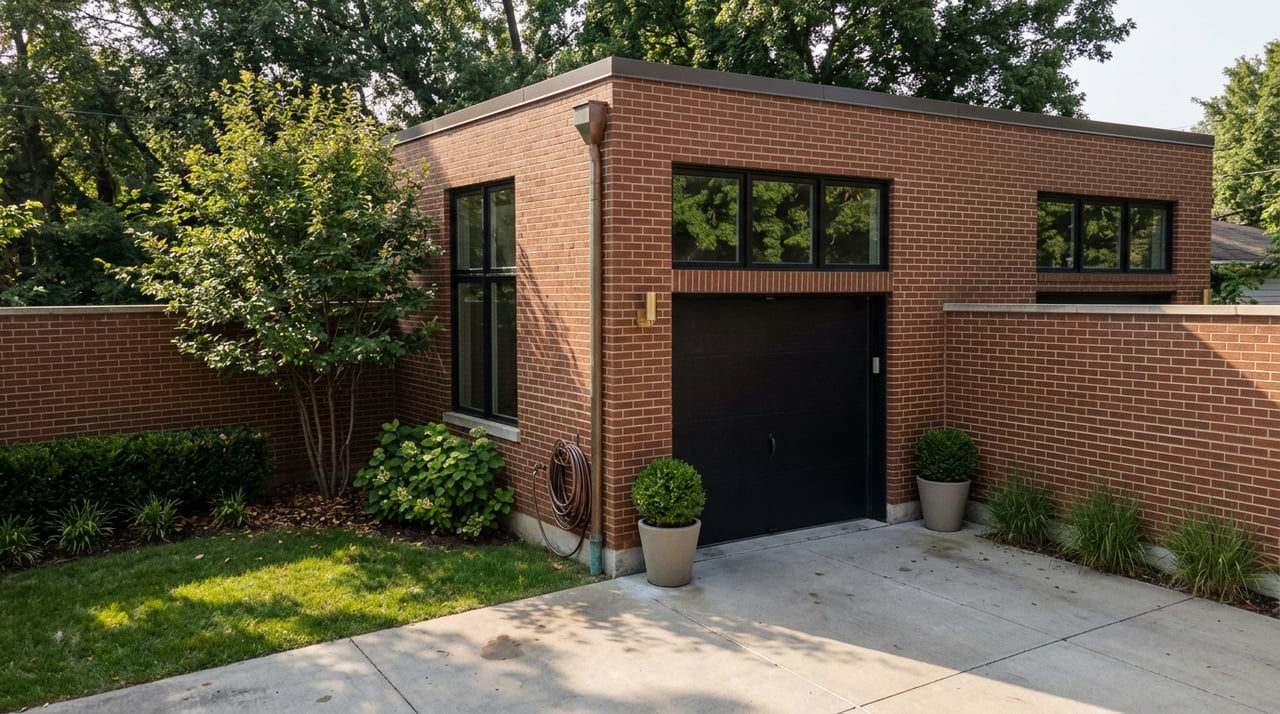
For many Lincoln Park homeowners, the idea of adding a coach house is incredibly appealing. It can create space for aging parents, adult children, guests, or a long-term tenant, all while making better use of an existing backyard or garage footprint.
According to Block Club Chicago, Chicago’s permanent Accessory Dwelling Unit ordinance took effect on April 1, 2026, making that possibility available to far more homeowners across the city. But while much of the conversation has focused on whether individual aldermen will allow ADUs in their wards, that may not be the biggest obstacle for many Lincoln Park properties.
In much of the neighborhood, zoning already permits an ADU without aldermanic approval. The more practical challenge may be finding a contractor who is qualified to build one under the new rules.
What Changed Under Chicago’s New ADU Ordinance
The City of Chicago’s ADU program recognizes two primary types of accessory dwelling units:
- A conversion unit created within an existing basement, attic, or other interior space
- A coach house, which is a detached residential structure located behind the primary building
Chicago largely prohibited new coach houses and secondary residential units. The city launched a pilot program that allowed ADUs in designated areas. The Neighborhood Housing Services of Chicago ADU manual identifies Lincoln Square as part of the North Zone, despite some understandable confusion between Lincoln Park and Lincoln Square; Lincoln Park was not included in that pilot.
That means Lincoln Park properties are now operating under the permanent ordinance that took effect this spring, not under rules that had already been tested locally during the pilot program.
Does Your Alderman Need to Approve a Coach House?
The answer depends largely on the property’s zoning.
In single-family RS zoning districts, the local alderman may play a role in ADU eligibility. An alderman may also establish additional conditions.
According to Chicago Cityscape, properties in multi-unit RT and RM zoning districts may generally add ADUs by right, without aldermanic approval. This is especially relevant in Lincoln Park, where two-flats, three-flats, greystones, and small condominium buildings make up a significant portion of the neighborhood’s housing stock.
Lincoln Park sits primarily within the 43rd Ward, represented by Alderman Timmy Knudsen. If a property is zoned RS, homeowners should confirm its eligibility with the 43rd Ward office before investing in architectural plans or construction estimates. For many RT- and RM-zoned properties, however, the alderman is unlikely to be the deciding factor.
Today’s Coach Houses May Be Smaller Than You Expect
One of the most important changes from the pilot program involves size.
Arete Renovators reports that, under the pilot, a coach house could include up to 700 square feet of living space. The permanent ordinance instead ties the allowable floor area to the property’s required rear setback. The maximum is 60 percent of that area, which may result in a coach house of roughly 450 square feet on a standard Chicago lot.
Requirement | Pilot Program | Permanent Ordinance |
|---|---|---|
Coach house size | 700-square-foot maximum | 60% of the required rear setback; approximately 450 square feet on a typical lot |
Height limit | A height limit applied | 22 feet |
Conversion-unit eligibility | Eligibility requirements applied | Eligibility requirements applied |
Owner occupancy | Requirements varied by location | According to ADU Zoning, owner occupancy is required for properties with two units or fewer. |
Short-term rentals | Not specified here | Prohibited |
Geographic coverage | Next City reports approximately 20% of Chicago | Approximately 60% of Chicago |
Homeowners researching coach houses may still come across contractor websites and older articles that reference the 700-square-foot limit. Before designing or pricing a project around that number, it is essential to confirm what the current ordinance allows on the specific lot.
Why Finding the Right Contractor Matters
This is where the process may become more complicated.
According to Block Club Chicago, under the permanent ordinance, a contractor building a detached coach house must participate in a federally registered apprenticeship program. That requirement applies specifically to coach-house construction and not to a basement or attic conversion.
The pool of Chicago-area residential contractors who meet this qualification is currently more limited than the pool available for a typical renovation or addition. A homeowner may find an excellent contractor for the primary residence who is not eligible to complete the coach house itself.
That can affect the project’s availability, timing, and cost. Full coach-house construction is often estimated between $150,000 and $350,000, depending on the site, finishes, utilities, and existing conditions. Contractor eligibility should therefore be investigated early, ideally before the design is finalized and well before construction numbers are treated as firm.
How a Coach House Could Affect Property Value
A legal ADU can change the financial picture of a Lincoln Park property in several ways.
A finished coach house may create long-term rental income, with the exact amount depending on its size, condition, layout, and location. It can also add flexibility for multigenerational living, guests, an au pair, or a private work-from-home space. For future buyers, that versatility may be just as compelling as the potential income.
At the same time, adding a legal second residence can change how a property is classified, appraised, and marketed. A single-family home with a permitted coach house may be viewed differently from a traditional single-family residence, and not every buyer will value that configuration in the same way.
Property taxes should also be part of the initial analysis. A permitted improvement may increase the property’s assessed value, although eligible homeowners may qualify for the Cook County Home Improvement Exemption, which can temporarily shield a portion of the added value from reassessment. Because every parcel and ownership structure is different, homeowners should review the potential tax implications with a qualified tax or assessment professional.
Questions Lincoln Park Homeowners Are Asking
Can I add both a coach house and a basement conversion?
No. The ordinance permits one ADU per eligible property, so an owner must choose between a detached coach house and an interior conversion unit.
Can I use the coach house as an Airbnb or Vrbo?
No. ADUs created under the ordinance are intended for long-term housing. Short-term rentals are not permitted.
Will a coach house automatically increase my home’s resale value?
Not necessarily. A legal, well-designed unit can add income potential and flexibility, but the return depends on the cost of construction, the property’s classification, the quality of the finished space, and the preferences of future buyers.
What should I confirm before hiring an architect?
Start with the property’s zoning, lot dimensions, owner-occupancy requirements, utility access, and the availability of an eligible contractor. Understanding those factors early can prevent a beautiful set of plans from becoming an impractical project.
Start With the Property, Not the Possibility
A coach house can be a smart addition to the right Lincoln Park property, but the opportunity is highly site-specific. Zoning eligibility is only the beginning. Lot dimensions, construction access, contractor qualifications, projected rent, taxes, and eventual resale all play a role in whether the numbers make sense.
If you are considering adding a coach house before selling, or evaluating a Lincoln Park home with future renovation potential, The Kasey Group can help you look at the decision through a real estate lens. We will help you understand how the project may affect your property’s positioning, marketability, and value before you commit to plans or construction.
This article is general information, not legal, tax or financial advice. Consult a qualified professional about your situation.