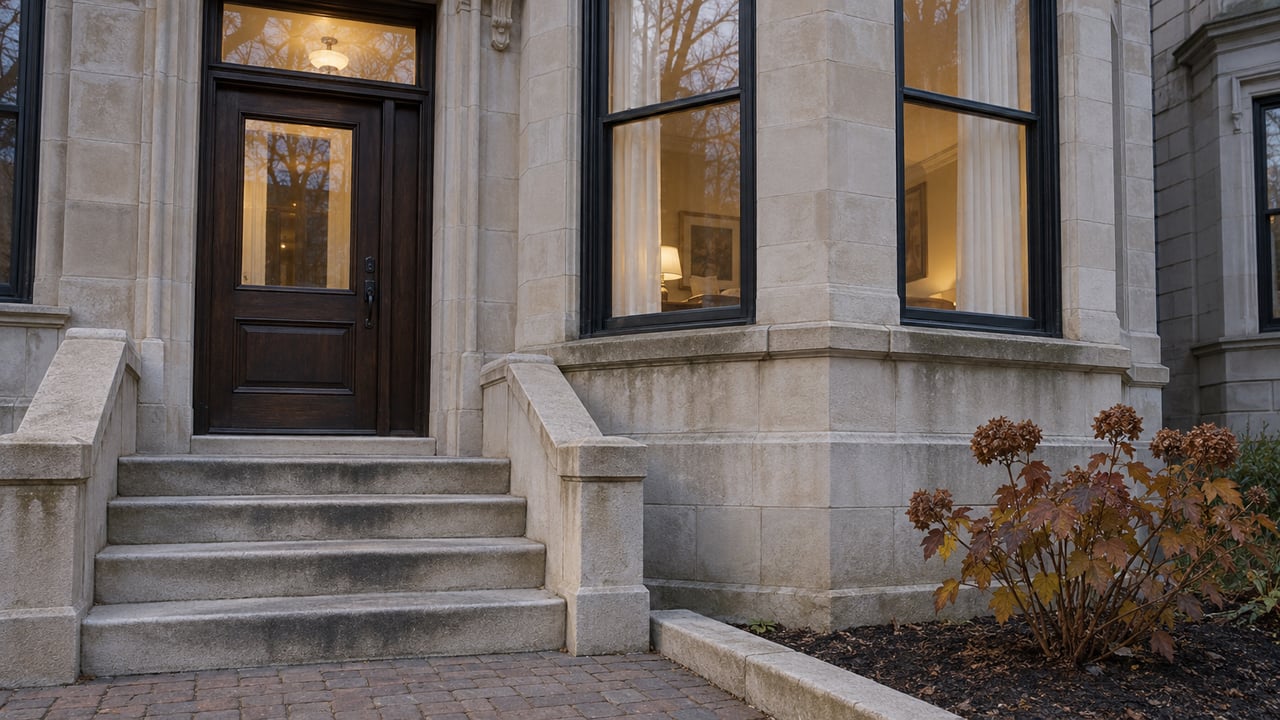
If the idea of listing your home publicly right away gives you pause, you are not alone. In a place as compact and private as Kenilworth, many sellers want more control over who sees their home, when showings happen, and how much information becomes part of the public record. A quiet launch can offer that control, and this guide will help you understand how Compass Private Exclusives work, what the tradeoffs are, and when this approach may make sense for your next move. Let’s dive in.
Why privacy matters in Kenilworth
Kenilworth is a small residential village in Cook County with a land area of about 0.6 square miles, according to the village and Census Bureau data. In a community with that kind of scale, listings can draw attention quickly, and public exposure may feel more noticeable than it would in a larger market.
For some sellers, that makes discretion especially valuable. You may want to limit showings, avoid broadcasting interior photos widely, or keep your timing flexible while you finalize repairs, staging, or planning for your next chapter.
What Compass Private Exclusives are
Compass Private Exclusives are properties shared within the Compass network rather than launched immediately on public real estate websites. Compass says these listings are accessible to its network of 340,000 agents and their serious buyers.
Compass presents this as the first phase of a three-phase launch strategy. That sequence begins with Private Exclusive, can move to Coming Soon, and may later expand to public websites.
This structure is designed to give you a more controlled start. It can help you test pricing, gather early feedback, and build interest before deciding whether a broader public debut is the right next step.
How this differs from other private listing options
In the Chicago-area market, it is important not to treat every private listing tool as the same. Compass Private Exclusives are a Compass-network product, while MRED's Private Listing Network is a separate MLS-based system available to MRED subscribers.
That distinction matters because the audience, distribution, and rules are not identical. If you are considering a discreet sale in Kenilworth, you want clarity about where your home will be seen, who can access it, and what happens if you later decide to expand exposure.
How a quiet sale usually works
A discreet sale is still a formal, regulated listing process. Illinois requires brokerage agreements to be in writing as soon as reasonably practical and no later than the showing or marketing of the property.
That agreement must identify the property, compensation terms, brokerage services, duration, and required fair housing language. In other words, a private launch is not informal or off the books. It is documented and handled within established rules.
You should also expect a disclosure explaining the tradeoff between privacy and exposure. If a home is not listed on the MLS at the start, that can reduce distribution to other brokerages and public websites, which may reduce the number of buyers, showings, and offers.
What you can expect as a Kenilworth seller
A Compass Private Exclusive is often best understood as a curated first step, not a separate universe from the broader market. You may begin with selective outreach, private showings, and controlled sharing while you evaluate feedback and timing.
Compass also says photos and floorplans are shared only within its trusted network. That can be helpful if your home is still being prepared, if renovations are underway, or if you simply prefer more limited visibility at the outset.
For some sellers, this creates breathing room. Instead of rushing to have every detail perfect for a public launch, you can refine presentation, monitor response, and decide whether to remain private or move to the next phase.
Benefits of selling quietly first
The biggest advantage is control. A private launch gives you more say over how your home is introduced and how quickly it reaches a wider audience.
Common benefits include:
- More privacy around your home and schedule
- Fewer, more targeted showings
- Time to complete repairs, updates, or staging
- Early pricing feedback before going fully public
- No public days on market or public price-drop history during the private phase, according to Compass
For a design-sensitive property, this can be especially useful. If your home would benefit from light preparation or a more polished visual presentation, a private phase gives you room to refine before making a broader first impression.
The tradeoffs to weigh carefully
Privacy comes with a clear tradeoff: reach. Compass states that if a home is not initially listed on the MLS, it will not be distributed to other brokerages or public real estate websites at that stage.
That narrower exposure may reduce the pool of potential buyers. In practical terms, that can mean fewer showings, fewer offers, and possibly a lower final sale price than you might achieve with broader visibility.
This does not mean a private strategy is the wrong choice. It means the strategy should match your priorities. If discretion, timing, and controlled access matter most, the tradeoff may be worthwhile. If maximum exposure is your top priority from day one, a public launch may be the better fit.
What pricing insights can a private phase provide?
One of the most useful parts of a private launch is the feedback loop. By sharing your home with a targeted network first, you can learn how serious buyers and agents respond to pricing, condition, and presentation.
Compass says this phase can help validate pricing and positioning before a public rollout. That can be valuable in a market where presentation details, timing, and buyer perception all shape momentum.
Compass has also reported that in its 2024 internal national analysis, pre-marketed homes were associated with a 2.9% higher closing price, 20% faster time to contract, and a 30% lower likelihood of a price drop compared with listings that went directly to the MLS. Compass also notes these figures are descriptive, not guarantees, and do not prove causation.
How MLS rules affect the process in the Chicago area
In the local MLS environment, MRED requires new listings to be entered within 48 hours of the effective date or within 24 hours after public advertising, such as a website or yard sign, whichever comes first. That means your marketing choices affect timing and compliance.
MRED also states that private listings are not fed to IDX, Broker Reciprocity, or syndication sites, and market time does not accrue while they remain private. MRED allows a private listing to include a price, no price, or a price range.
If your plan later changes, a private listing can transition to another status or expire. MRED does not set a minimum or maximum period for the private phase as long as it fits the written agreement.
Coming Soon versus Private Exclusive
These terms are often used together, but they do not mean the same thing. Compass positions Private Exclusive as the first phase, followed by Coming Soon and then public websites.
More broadly, Coming Soon is a marketing strategy, not a single national MLS status with one universal rulebook. Local MLS rules control whether a coming-soon or delayed-marketing status exists, what disclosures are required, whether showings are allowed, and whether days on market or price history are tracked.
Private Exclusive generally means a more limited audience and no public marketing. Coming Soon typically signals a broader pre-launch stage before full public exposure, depending on local rules.
When a quiet sale may be the right fit
A discreet strategy can make sense if your priorities go beyond speed and visibility alone. You may value privacy, scheduling control, and a measured rollout more than a broad day-one launch.
This approach may be worth considering if you:
- Prefer limited exposure in a small community like Kenilworth
- Need time for repairs, renovation, or staging
- Want to test pricing before going public
- Would like private showings with serious, targeted buyers
- Want the option to expand later if needed
For sellers in transition, this can feel less disruptive and more intentional. It gives you room to prepare thoughtfully while still engaging the market in a controlled way.
How The Kasey Group approaches a discreet sale
A quiet launch works best when it is handled with precision. That means clear pricing strategy, thoughtful preparation, carefully managed showings, and a plan for what happens next if the market response suggests a broader rollout.
The Kasey Group brings a design-led perspective to that process, helping you refine presentation before your home is seen by buyers. With Compass tools, private marketing options, and concierge-minded project management, the goal is to align your exposure strategy with your timing, comfort level, and financial priorities.
If your Kenilworth home would benefit from a tailored, low-profile introduction, a private phase can be a smart starting point. The key is making that decision with a full understanding of both the benefits and the limits.
If you are considering a discreet sale in Kenilworth and want a calm, informed strategy, The Kasey Group can help you evaluate whether Compass Private Exclusives fit your goals.
FAQs
What is a Compass Private Exclusive in Kenilworth?
- A Compass Private Exclusive is a listing shared within the Compass network rather than launched immediately on public real estate websites, which can give Kenilworth sellers more control over privacy and showings.
How is Compass Private Exclusives different from MRED private listings?
- Compass Private Exclusives are a Compass-network product, while MRED private listings are part of the Chicago-area MLS system and follow separate rules, audience access, and distribution standards.
Does a private home sale in Kenilworth still require paperwork?
- Yes. Illinois requires brokerage agreements to be in writing no later than the showing or marketing of the property, and those agreements must include specific terms and fair housing language.
Will a private listing in Kenilworth appear on public real estate websites?
- Not during the private phase. Compass states that homes not initially listed on the MLS will not be distributed to other brokerages or public real estate websites at that stage.
Can a Kenilworth seller start private and go public later?
- Yes. Compass describes a three-phase strategy that can move from Private Exclusive to Coming Soon to public websites, and MRED also allows private listings to transition to other statuses or expire.
Is selling quietly the best strategy for every Kenilworth home?
- No. A quiet sale offers privacy and control, but it may also reduce buyer reach, showings, and offers, so the right strategy depends on your goals, timeline, and comfort with public exposure.