Wondering whether a West Loop luxury loft is a smart place to put your money? It is a fair question, especially in a neighborhood where pricing is strong, inventory moves quickly, and the word luxury can mean very different things from one building to the next. If you are weighing lifestyle appeal against long-term value, this guide will help you look past the buzz and focus on what really supports resale and staying power. Let’s dive in.
West Loop Market Signals Matter
West Loop has several signs of a competitive market. Realtor.com reported 198 active homes in May 2026, with a median listing price of $475,000, median days on market of 24, and a sale-to-list ratio of 102%. Redfin also showed a median sale price of $499,000 over the last three months, up 6.2% year over year.
Those numbers suggest buyers are still willing to compete for the right property. For you as a buyer or investor, that does not mean every loft is a smart purchase. It means selectivity matters more when a market is moving fast and pricing is already firm.
Why West Loop Keeps Drawing Buyers
West Loop continues to attract attention because its core advantages are hard to duplicate in Chicago. The West Loop Community Organization describes the area as walkable, close to downtown and the riverfront, and rich with businesses. Choose Chicago also points to Randolph Street as one of the city’s most dynamic dining destinations.
Transit access strengthens that appeal. CTA notes that Morgan station was opened to improve access to the growing West Loop, and nearby Green, Pink, and Blue line service includes stations such as Morgan, Clinton, Ashland, UIC-Halsted, and Illinois Medical District. For many buyers, that combination of convenience, dining, and connectivity supports long-term demand.
Authentic Lofts Have a Scarcity Story
Part of West Loop’s value story comes from its industrial past. WBEZ described the neighborhood’s shift from warehouses and factories to high-end loft living beginning in the 1980s. Later, the City of Chicago designated the Fulton-Randolph Market Landmark District in 2015, covering 74 acres, 142 properties, and 86 contributing buildings.
That history matters because it helps explain why authentic loft inventory feels limited. In real estate, finite supply often supports buyer interest over time, especially when the property has features that are difficult to reproduce in newer buildings.
What Luxury Loft Means in West Loop
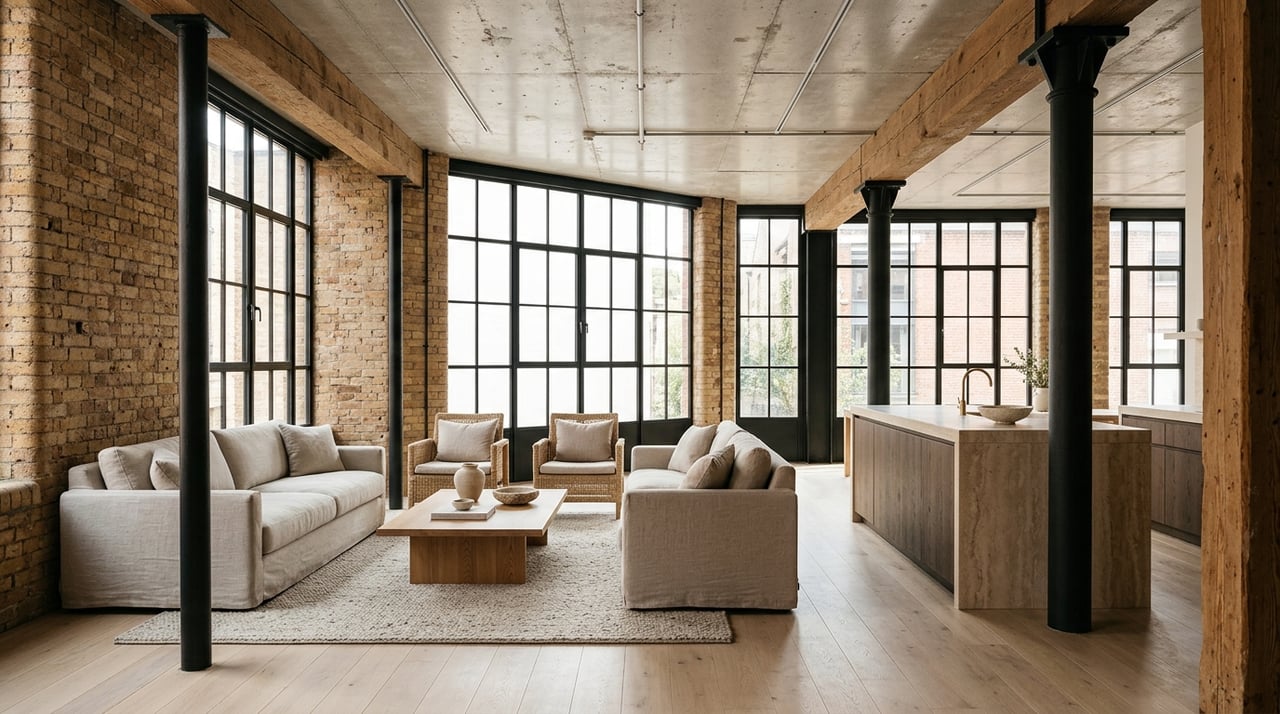
In West Loop, a luxury loft is not one single product type. It may be a true warehouse or factory conversion with original industrial character, or it may be a newer condo with loft-inspired design cues like high ceilings, open layouts, and exposed structural elements.
Preservation Chicago and the National Park Service describe classic Chicago industrial loft buildings as masonry structures with brick façades, heavy timber interiors, expansive windows, and tall ceilings. Current listings often highlight features such as timber beams, floor-to-ceiling windows, private rooftop decks, penthouse layouts, stone baths, quartz countertops, and fireplaces.
That distinction is important for your investment decision. Buyers often pay differently for authentic character than for a newer home that simply borrows the loft look.
Buyer Demand Supports the Category
West Loop is not a census-designated neighborhood, so the closest official statistical proxy is the Near West Side community area. CMAP’s 2024 snapshot shows a median age of 32.7, with 41.3% of residents between ages 20 and 34. It also reports 52.5% one-person households, 67.4% non-family households, 65.3% renter-occupied housing, and a median household income of $111,332.
That profile points to a buyer and renter base that likely values convenience, design, and access over larger lots or more suburban layouts. Realtor.com’s May 2026 snapshot also reported 947 rentals and a median rent of $2,982 per month, which suggests a substantial rental base in the broader market mix.
For you, that means West Loop lofts may benefit from a deep pool of people already oriented toward urban living. That does not guarantee appreciation, but it does support ongoing demand from buyers who prioritize location, style, and easy daily logistics.
Converted Lofts vs New Construction
Converted Lofts Offer Character and Limited Supply
Converted lofts tend to have a scarcity advantage. Their value often comes from historic character, recognizable architecture, and a connection to the neighborhood’s original industrial identity. Preservation Chicago notes that many West Loop industrial buildings outside the landmark district remain vulnerable to demolition or incompatible redevelopment, which reinforces the idea that truly authentic loft stock is limited.
If you are buying for long-term hold, a well-maintained converted loft in a respected building may have stronger differentiation at resale. Features like heavy timber, oversized windows, brick walls, and unusual floor plans can create a level of uniqueness that newer product may struggle to match.
New Construction Offers Different Benefits
New construction has a different appeal. Buyers often pay for modern systems, fresh finishes, building amenities, and the simplicity of unused condition. Brookings summarized research showing a measurable premium for new homes versus existing homes, which helps explain why new luxury inventory can command high pricing.
But that premium deserves a closer look. Realtor.com’s June 2026 pricing research says new-construction homes have been more willing to accept price cuts and incentives since 2023, and condo pricing has softened relative to March 2022, with the average condo selling at 97.9% of final list compared with 99.2% for single-family homes. In other words, paying more upfront for newness does not automatically mean stronger resale later.
West Loop New-Build Pricing Raises the Bar
West Loop’s newest luxury product can come with a steep entry cost. Axios reported Embry units ranging from $1.4 million to $7.5 million. That kind of pricing signals that much of the neighborhood’s new luxury supply is aimed at buyers willing to pay a significant premium for amenities and modern construction.
For you, the question is whether that premium is justified by your goals. If you value turnkey living and full-service amenities, a new building may still make sense. If your focus is value retention, rarity and unit-level distinction may matter more than simply being the newest option on the block.
What Makes a Loft a Smarter Investment
The strongest West Loop loft investment thesis is usually selective, not broad. The best opportunities are often the lofts that stand out in ways buyers will still care about years from now.
Look for these traits:
- Authentic character such as heavy timber, original masonry, expansive windows, and high ceilings
- A strong micro-location with easy access to transit, dining corridors, and daily conveniences
- A recognizable building identity that buyers remember and seek out
- Thoughtful layouts that feel functional, open, and flexible
- Distinctive outdoor space or premium features like a private rooftop deck, penthouse positioning, or standout views
- Well-maintained condition with updates that support livability without stripping away character
A generic unit in a crowded category may have a harder time standing out at resale. A loft with true personality and practical livability often has a clearer story when it comes time to sell.
Risks to Keep in Mind
Even in a strong neighborhood, not every purchase performs the same way. West Loop lofts can be a smart move, but there are still risks you should weigh carefully.
First, not all loft-style homes are equally rare. A newer condo with high ceilings and industrial-inspired finishes may look appealing, but it may not command the same long-term premium as a true conversion with irreplaceable architecture.
Second, condo resale depends heavily on differentiation. If your unit is similar to many others in the same building or nearby inventory, you may face more pricing pressure when you sell.
Third, buying at the top of the new-construction premium can narrow your upside. If much of the value is already priced in on day one, future appreciation may rely more on broader market strength than on the home’s uniqueness.
The Smartest Approach for Buyers
If you are considering a West Loop luxury loft, it helps to think like both a homeowner and a future seller. Buy the property that delivers present-day enjoyment, but also ask what the next buyer will pay a premium for.
In many cases, the smartest move is a loft that combines authentic architecture, strong location, and lasting design appeal. That could be a true timber conversion with scarce features, or it could be a standout new-build unit in a building with enduring buyer demand. What matters most is not whether the listing says luxury loft. It is whether the home offers something difficult to replace.
A design-led lens can be especially helpful here. The units that tend to hold attention are often the ones with the clearest identity, the best light, the strongest flow, and the most memorable finishes. In a neighborhood where buyers have options, presentation and distinction count.
Bottom Line on West Loop Lofts
Yes, West Loop luxury lofts can be a smart investment move, especially as a long-term hold. The case is strongest when the unit is distinctive, well-located, and tied to the neighborhood’s authentic character rather than relying only on size or newness.
If you want to buy with a sharper eye for value, design, and future resale appeal, working with an advisor who understands both the numbers and the product can make all the difference. For tailored guidance on Chicago luxury properties, connect with The Kasey Group.
FAQs
Are West Loop luxury lofts a good long-term investment?
- West Loop luxury lofts can be a smart long-term hold, especially when the unit is distinctive, well-located, and offers authentic character that is hard to duplicate.
What makes an authentic West Loop loft different from a newer loft-style condo?
- An authentic West Loop loft usually comes from a converted industrial building and may feature heavy timber, brick, large windows, and tall ceilings, while a newer loft-style condo often borrows those design cues without the same historic building fabric.
How competitive is the West Loop housing market right now?
- In May 2026, Realtor.com reported 198 active homes, a median listing price of $475,000, median days on market of 24, and a sale-to-list ratio of 102%, which points to solid buyer competition for well-positioned properties.
Why do buyers keep choosing West Loop in Chicago?
- West Loop continues to attract buyers because of its walkability, access to downtown and the riverfront, strong dining scene, and nearby CTA service including Morgan, Clinton, Ashland, UIC-Halsted, and Illinois Medical District stations.
Are converted lofts in West Loop better than new construction for resale?
- Not always, but converted lofts often have a scarcity advantage because authentic industrial buildings are limited, while new construction may carry a higher upfront premium that does not automatically translate to stronger resale performance.
What should you look for when buying a West Loop luxury loft?
- Focus on authentic character, a strong location, a functional layout, recognizable building appeal, and features that make the unit stand out from similar condos in the market.